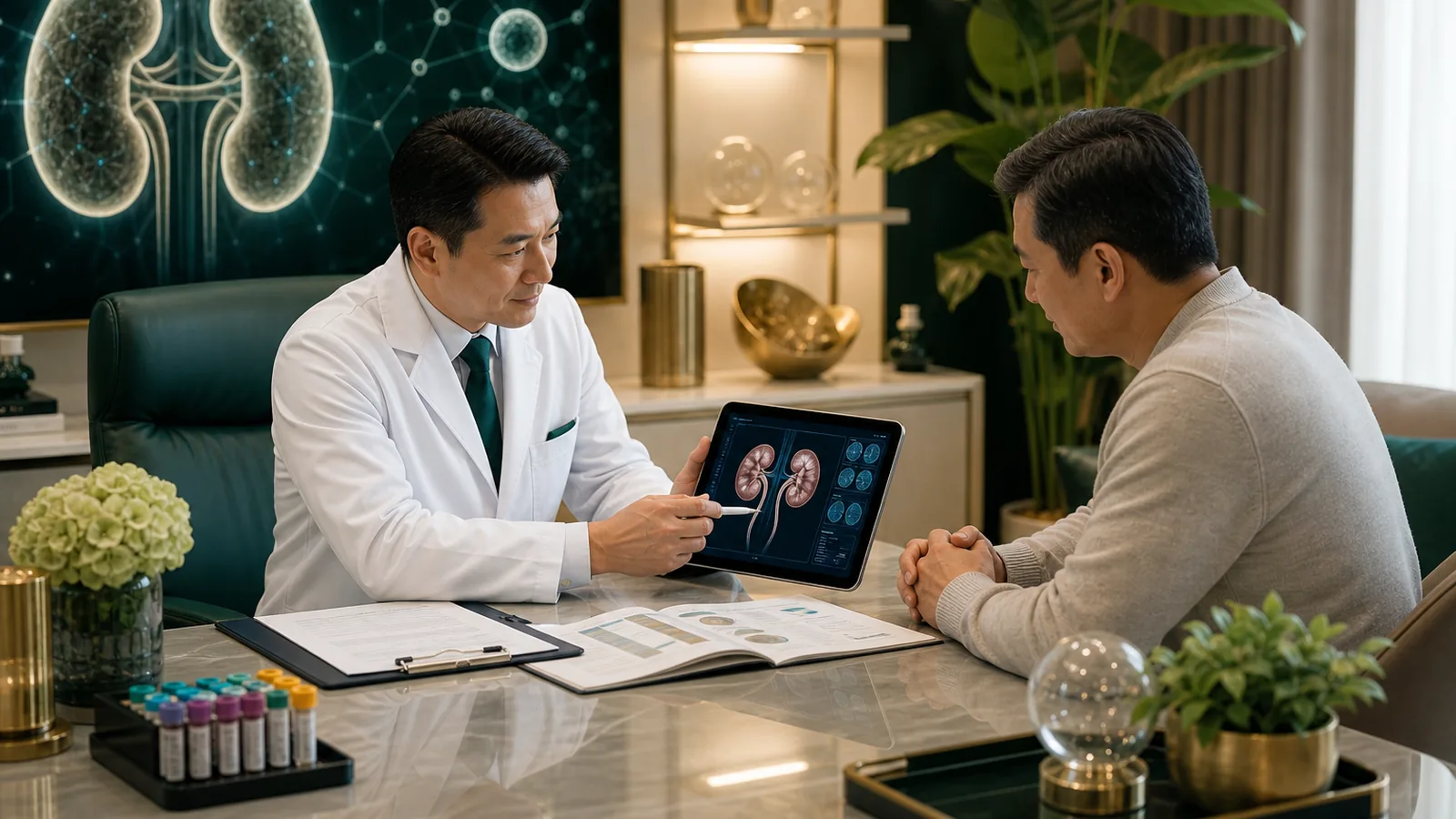

International patient couple discussing stem cell treatment planning with a doctor in Malaysia

Muslim And International Patients: Planning Stem Cell Treatment In Malaysia

Malaysia is a practical destination for Muslim and international patients who want private medical care, regional accessibility, family-friendly travel, and culturally aware support. For stem cell treatment, the journey should begin with medical suitability and safety, not flight booking.

International patients often need more than a treatment appointment. They need record review, travel timing, privacy, family coordination, accommodation planning, dietary considerations, and follow-up communication after returning home.

What Muslim Patients Commonly Ask

  • What is the source of the stem cells or biologic product?
  • Can the team explain the treatment process clearly before travel?
  • Will privacy and modesty be respected during care?
  • Can family members be involved in planning?
  • Are prayer time, recovery time, and travel comfort considered?
  • Will follow-up continue after returning home?

Medical Planning Before Travel

Patients should send diagnosis reports, medications, allergies, recent blood tests, imaging, and prior treatment history before arranging travel. This helps the clinical team identify risks, confirm whether the discussion is appropriate, and avoid unnecessary travel where treatment is unlikely to be suitable.

Why Malaysia Works For Regional Patients

Malaysia offers strong regional connectivity, multilingual coordination, private healthcare access, and a familiar environment for many Muslim patients from Indonesia, the Middle East, Brunei, Singapore, and surrounding regions. The medical decision, however, must remain doctor-led.

Useful Next Steps

Read our dedicated page on Muslim stem cell treatment in Malaysia, our overview of stem cell therapy in Malaysia, and the Clinical Intelligence Platform for online record review.

FAQ

Can international patients start online?

Yes. Online review is recommended before travel because it helps clarify suitability, records needed, and realistic next steps.

Can family members join the consultation?

In many cases, family members can help coordinate information and attend discussions, especially when they support travel and recovery planning.

Is treatment guaranteed after travel?

No. Suitability must still be confirmed clinically. Treatment should not proceed if the doctor determines that risks outweigh potential benefits.

Evidence And Safety Notes

This guide is educational and should not replace a medical consultation. Patients should review current evidence, local regulations, cell source, processing standards, adverse-event planning, and realistic goals before treatment.

Clinician reviewing exosome therapy and regenerative medicine quality factors

Exosome Therapy Malaysia: What Patients Should Know Before Regenerative Treatment

Exosome therapy is one of the most searched topics in regenerative medicine because patients hear that exosomes may support cell signaling, inflammation modulation, and tissue repair. The science is promising, but the clinical marketplace can be confusing.

Exosomes are extracellular vesicles released by cells. In research, they are studied for communication between cells and potential therapeutic applications. In patient care, the key issue is quality, source, processing, dose, indication, safety monitoring, and regulatory context.

Why Exosome Quality Questions Matter

  • What is the source of the exosome product?
  • How is it isolated, tested, stored, and transported?
  • What quality-control documentation is available?
  • What route of administration is being proposed and why?
  • What adverse events are possible?
  • Is the treatment being positioned responsibly, or marketed as a cure-all?

Evidence Is Developing, Not Final

Clinical research on exosomes and extracellular vesicles is expanding across regenerative medicine, inflammatory conditions, wound healing, aesthetics, and other fields. But patients should understand that promising early data does not mean every commercial exosome treatment is proven for every condition.

Who Should Be More Cautious?

Patients with active infection, cancer history, immune disorders, uncontrolled chronic disease, pregnancy, or unclear diagnosis should have especially careful medical review. Patients should also avoid providers who cannot explain product source and safety procedures.

Where To Learn More

Read our exosome stem cell therapy guide and consider a Clinical Intelligence Review before making a treatment decision.

FAQ

Are exosomes the same as stem cells?

No. Exosomes are extracellular vesicles involved in cell-to-cell signaling. They are not living stem cells.

Is exosome therapy suitable for every condition?

No. Suitability depends on diagnosis, health status, treatment goals, evidence, and product quality.

What is the biggest red flag?

A provider who promotes exosomes as a guaranteed cure for many unrelated diseases without clear screening, documentation, or risk discussion.

Evidence And Safety Notes

This guide is educational and should not replace a medical consultation. Patients should review current evidence, local regulations, cell source, processing standards, adverse-event planning, and realistic goals before treatment.

Clinician and parent reviewing autism developmental assessment before stem cell therapy discussion

Stem Cell Therapy For Autism: A Parent Guide To Safety, Expectations And Clinical Review

Parents searching for stem cell therapy for autism usually want hope, but they also need clarity. Autism spectrum disorder is complex, and no responsible clinic should present stem cell therapy as a guaranteed cure or replacement for developmental, behavioral, educational, and medical support.

Stem cell-based approaches for autism are being researched because of interest in immune regulation, inflammation, neurodevelopment, and cellular signaling. However, evidence remains limited and heterogeneous. Families should be protected from overpromising.

What Parents Should Ask First

  • What clinical goals are realistic for my child?
  • What evidence supports this approach and what evidence is still uncertain?
  • What safety screening is required before treatment?
  • What developmental assessments should be reviewed?
  • How will progress be monitored after treatment?
  • Will existing therapies continue?

Information To Prepare Before Review

Prepare diagnosis reports, developmental assessments, therapy history, medication list, seizure history, allergy history, immune or inflammatory conditions, sleep and gastrointestinal issues, and a clear description of the family’s goals. This helps the clinical team decide whether further discussion is appropriate.

Why Expectation-Setting Matters

Some families report improvements after regenerative interventions, while controlled evidence remains cautious. A responsible review should explain that developmental response is variable, long-term data may be limited, and existing therapies should not be stopped without professional guidance.

Stem Cell Center Malaysia Pathway

Families can review our stem cell therapy for autism information and begin with a Clinical Intelligence Review. The goal is to understand suitability, safety, and whether the discussion should continue.

FAQ

Is stem cell therapy approved as a cure for autism?

No. It should not be described as a cure. Families should approach it as a medical discussion with evidence limits, safety review, and realistic goals.

Should behavioral therapy stop if regenerative treatment is considered?

No. Developmental and behavioral support remains important. Any change to care should be discussed with qualified professionals.

Can children be reviewed online first?

Yes. An initial online review can help determine whether it is appropriate to proceed to a deeper consultation before travel or treatment planning.

Evidence And Safety Notes

This guide is educational and should not replace a medical consultation. Patients should review current evidence, local regulations, cell source, processing standards, adverse-event planning, and realistic goals before treatment.

Doctor reviewing diabetes and metabolic health data before stem cell therapy in Malaysia

Stem Cell Therapy For Diabetes In Malaysia: Evidence, Suitability And Patient Screening

Diabetes is one of the most searched conditions in regenerative medicine because patients want better glucose control, fewer complications, and more options beyond routine medication. Stem cell therapy for diabetes is being studied, but it should be discussed carefully and never presented as a guaranteed cure.

The first question is not simply whether a patient has type 1 or type 2 diabetes. A proper review looks at insulin production, HbA1c trend, kidney function, neuropathy, vascular risk, weight, medications, infection history, and whether diabetes complications are stable enough for treatment planning.

What Current Evidence Suggests

Research on mesenchymal stem cells and related cell-based approaches continues to develop. Some studies report signals related to glycemic control, inflammation, beta-cell function, or insulin requirement, while other reviews show mixed or modest effects depending on diabetes type, protocol, and follow-up period. This is why individual screening matters.

Who Needs Careful Screening?

  • Patients with uncontrolled HbA1c or frequent hypoglycemia.
  • Patients with kidney disease, cardiovascular disease, diabetic foot wounds, or active infection.
  • Patients using immune-modulating medication.
  • Patients expecting to stop all diabetes medication immediately.
  • Patients who have not had recent blood work or specialist review.

What A Doctor-Led Review Should Include

A diabetes suitability review should include recent HbA1c, fasting glucose, kidney markers, liver function, inflammatory markers where relevant, medication list, complication history, and the patient’s current treatment goals. For some patients, optimization of standard diabetes care is the safer first step.

How Stem Cell Center Malaysia Approaches Diabetes Enquiries

Our team reviews diabetes enquiries through suitability, safety, and expectation-setting. Patients can start with stem cell therapy for diabetes information and then submit records through the Clinical Intelligence Platform for a more structured review.

FAQ

Can stem cell therapy cure diabetes?

No ethical provider should guarantee a cure. The discussion should focus on suitability, possible supportive goals, risks, evidence limitations, and ongoing diabetes care.

Do I still need my endocrinologist?

Yes. Patients with diabetes should continue standard medical care and medication decisions should remain doctor-supervised.

What records should I prepare?

Prepare HbA1c, fasting glucose, C-peptide if available, kidney and liver blood tests, medication list, complication history, and recent specialist notes.

Evidence And Safety Notes

This guide is educational and should not replace a medical consultation. Patients should review current evidence, local regulations, cell source, processing standards, adverse-event planning, and realistic goals before treatment.

Doctor reviewing stem cell therapy cost and safety factors with a patient in Malaysia

Stem Cell Therapy Malaysia 2026: Cost, Safety And Questions To Ask Before Treatment

Patients searching for stem cell therapy in Malaysia often want two answers first: how much it may cost and whether it is suitable for their condition. The responsible answer is that cost should never be separated from clinical screening, cell source, processing quality, delivery method, follow-up, and realistic expectations.

Malaysia is attractive for regional patients because it offers private healthcare access, international travel convenience, multilingual coordination, and a growing regenerative medicine ecosystem. But stem cell treatment is not a simple product. It is a clinical decision that should begin with a doctor-led review, not a package price.

What Usually Affects Stem Cell Therapy Cost In Malaysia?

  • The condition being reviewed and how complex the medical history is.
  • The type of regenerative product discussed, such as mesenchymal stem cells or exosome-based options.
  • Cell source, screening, processing, storage, and quality documentation.
  • Required blood tests, imaging, specialist review, or pre-treatment optimization.
  • Delivery route, monitoring, and follow-up schedule.
  • International patient support, travel coordination, and aftercare communication.

A low headline price can become expensive if screening is weak, reports are not reviewed properly, or the provider cannot explain what is being administered. A higher price is not automatically better either. Patients should ask for transparent clinical reasoning.

Safety Questions Every Patient Should Ask

  1. What is the exact cell or biologic product being discussed?
  2. Where is it sourced and how is it processed?
  3. Is my diagnosis appropriate for this treatment pathway?
  4. What outcomes are realistic and what outcomes are not promised?
  5. What adverse events are possible and how are they handled?
  6. What information must I provide before treatment is accepted?
  7. Will a doctor review my records before I travel?

Red Flags To Avoid

Be cautious if a clinic promises a cure, guarantees results, gives a price before reviewing medical reports, refuses to discuss risks, or markets one treatment as suitable for almost every condition. Ethical regenerative medicine should explain uncertainty clearly.

Where To Start

Patients comparing options can begin with a structured Clinical Intelligence Review. If you are still exploring destination and suitability, also read our guide to stem cell therapy in Malaysia and our page for Indonesian patients considering treatment in Malaysia.

FAQ

Can I get a fixed price before consultation?

A range may be possible, but a responsible final estimate should follow medical review because testing, suitability, risk factors, and treatment planning vary between patients.

Is stem cell therapy suitable for everyone?

No. Some patients are not suitable because of diagnosis, active infection, cancer history, unstable medical conditions, medications, or unrealistic treatment goals.

Should I travel before my medical reports are reviewed?

No. International patients should ideally complete an online review first so travel is only planned after clinical suitability is considered.

Evidence And Safety Notes

This guide is educational and should not replace a medical consultation. Patients should review current evidence, local regulations, cell source, processing standards, adverse-event planning, and realistic goals before treatment.