
NeuroExo Exosome Nasal Spray Malaysia
A clear guide for patients asking about intranasal exosomes, potential nose-to-brain transport research, product quality, safety questions and doctor-led suitability review.
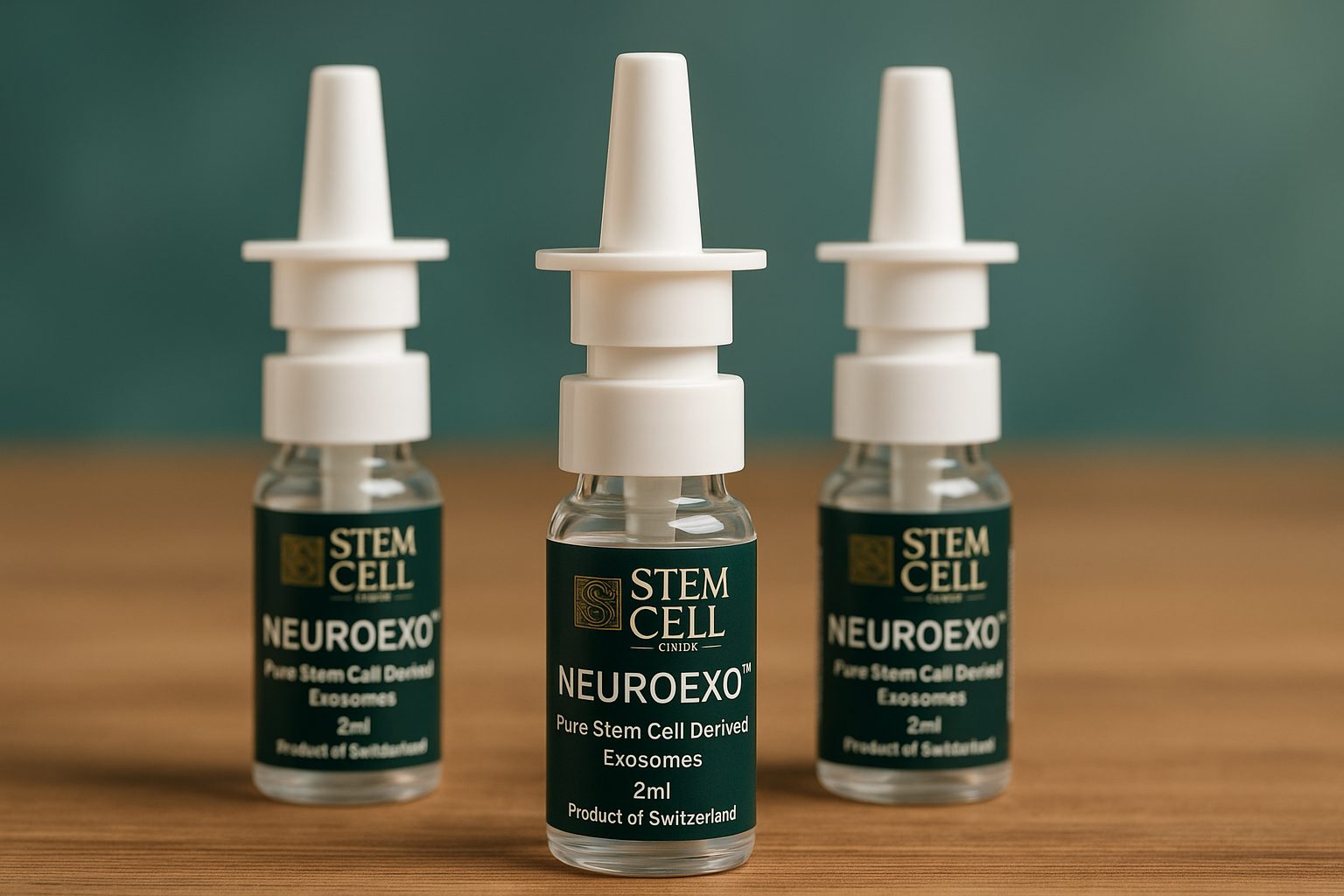
What is an exosome nasal spray?
An exosome nasal spray is an intranasal product described as containing extracellular vesicles or exosome-enriched material. Exosomes are cell-derived particles involved in cellular communication.
The intranasal route is being researched for potential nose-to-brain transport. That research does not, by itself, prove that a particular product reaches a target tissue or improves a neurological condition in people.
Product facts matter as much as the delivery route.
For NeuroExo, patients should ask what the product contains, how it was manufactured and characterised, what dose and carrier are used, how sterility and storage are controlled, what evidence applies to their condition and what monitoring is planned.
Patients comparing different exosome routes can also review our broader Exosome Therapy Malaysia guide.
What research supports, and what it does not yet prove
Established extracellular vesicle science
Extracellular vesicles are cell-derived particles that can carry proteins, lipids and nucleic acids. International research standards describe how EV studies and product characterisation should be reported.
Promising but mainly preclinical evidence
Intranasal EV studies have reported biological effects in laboratory and animal models. Results in cells or animals do not establish clinical benefit in people.
Human evidence is still developing
Early human studies and registered trials are emerging for selected neurological questions. Trial registration or an early-phase study is not proof of effectiveness.
NeuroExo should not be presented as proven to treat, reverse or cure autism, Parkinson's disease, stroke, cognitive decline or another neurological condition. Evidence and suitability must be reviewed case by case.
Questions to ask before considering an intranasal exosome product
Source and manufacturing
Ask for the biological source, manufacturing process and whether the material is described as purified EVs, exosome-enriched material or another preparation.
Characterisation and quality
Ask about particle measurements, relevant EV markers, sterility, endotoxin testing and batch or Certificate of Analysis documentation where available.
Dose, carrier and storage
Confirm dose, administration schedule, carrier ingredients, allergies, storage conditions, cold-chain controls and handling instructions.
Monitoring and adverse events
Agree on what symptoms, safety issues, functional measures and follow-up records will be monitored, and who should be contacted if a concern occurs.
Neurological enquiries need diagnosis-specific review.
Autism, Parkinson's disease, cognitive decline and stroke recovery are different clinical situations. Review should consider diagnosis, current symptoms, medications, allergies, nasal or sinus health, imaging, laboratory findings, rehabilitation and the patient's goals.
A discussion may conclude that additional diagnostics, specialist review, rehabilitation or another care pathway should come before any exosome conversation.
The Clinical Intelligence Platform helps organise reports and identify the questions that should be answered before treatment planning.
How to start a NeuroExo review
1. Submit the medical background
Share the diagnosis, age, medical history, current medication, allergies, prior therapies, reports, imaging and treatment goals.
2. Review evidence and suitability
The team reviews the clinical context, product and route questions, safety factors, evidence limitations and whether other assessment should come first.
3. Define monitoring and follow-up
If discussion continues, the plan should define administration details, safety monitoring, rehabilitation support and condition-relevant follow-up measures.
Questions patients ask about exosome nasal spray
What is an exosome nasal spray?
It is an intranasal product described as containing extracellular vesicles or exosome-enriched material. Patients should verify the source, composition, characterisation, quality controls and intended clinical rationale.
Does an exosome nasal spray deliver exosomes directly to the brain?
The intranasal route is being studied for potential nose-to-brain transport, but this does not prove that every product reaches a target tissue or produces a clinical benefit in people.
Is NeuroExo proven to treat autism, Parkinson's disease, stroke or cognitive decline?
No definitive clinical conclusion should be made from preclinical research or trial registration alone. Evidence, alternatives, risks and suitability need diagnosis-specific medical review.
What product documents should patients request?
Ask about source and manufacturing, EV characterisation, particle measurements, sterility and endotoxin testing, dose, carrier ingredients, storage, batch details and a Certificate of Analysis where available.
What information should I submit before review?
Submit diagnosis records, medications, allergies, nasal or sinus history, neurological reports, imaging, prior therapies, current symptoms and clear treatment goals.
Sources used for this patient guide
MISEV2023 reporting standards
International Society for Extracellular Vesicles guidance on extracellular vesicle study design, characterisation and reporting.
Intranasal extracellular vesicle review
A 2025 peer-reviewed review describes intranasal EV delivery as promising while noting that clinical trials are still needed.
Registered human research
ClinicalTrials.gov lists early studies involving intranasal exosome products; registration describes planned research and does not establish effectiveness.
US safety context
The US FDA has warned patients about unapproved exosome products. Regulatory requirements and product status must be checked in the country where care is provided.
Neurological concerns patients commonly ask about
NeuroExo questions should be reviewed through the lens of diagnosis, neurological records, safety, inflammation and rehabilitation needs.
Autism / ASD support questions
Families often ask about exosomes, neuroinflammation, gut-brain axis and developmental support planning.
View pathwayStroke recovery
Stroke patients need imaging, functional baseline, therapy history and recovery goals reviewed together.
View pathwayParkinson's disease
Movement symptoms, medication timing and rehabilitation goals should guide any regenerative medicine discussion.
View pathwayCognitive decline
Memory concerns need caregiver input, diagnosis records, medications, imaging and safety planning.
View pathwayReview the evidence and product facts before treatment planning.
Send your medical background, reports and goals so the clinical team can assess the evidence context, safety questions, product documentation and whether another pathway should be discussed first.
Compare the treatment through a doctor-led pathway.
Use this page as part of a structured decision journey: clarify the patient goal, prepare records, compare options responsibly and move into Clinical Intelligence Review when ready.