
Telomere Test
A cellular ageing assessment that helps compare biological age signals with chronological age and supports longevity, recovery and regenerative medicine planning.
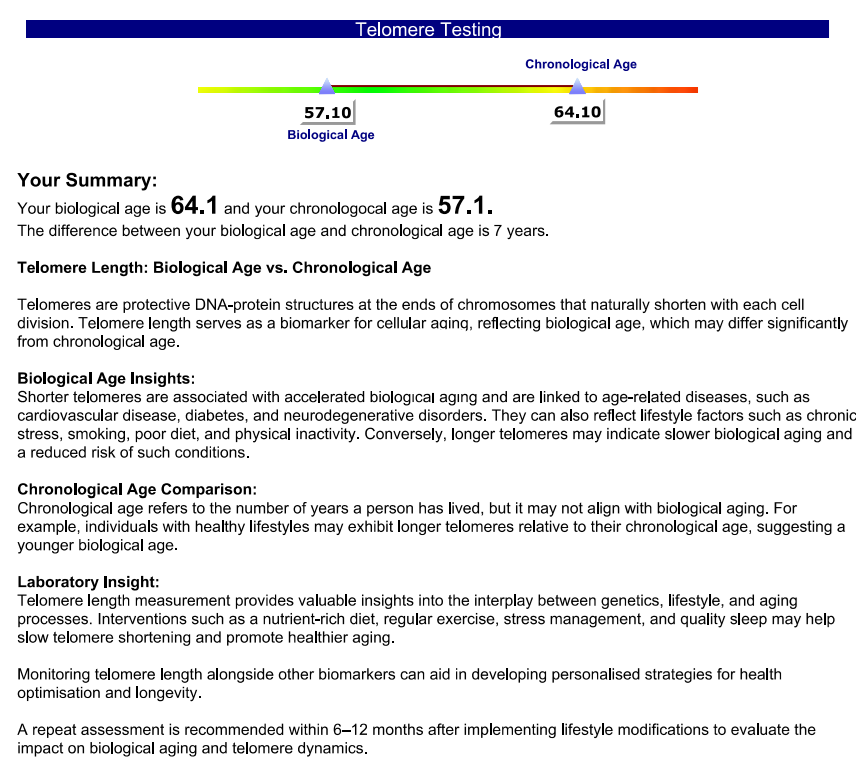
Telomeres help tell the story of cellular ageing.
Telomeres are protective DNA sequences at the ends of chromosomes. They tend to shorten as cells divide. Telomere testing can help estimate cellular ageing patterns and support discussions around oxidative stress, inflammation, recovery and longevity strategy.
Biological age becomes useful when connected to action.
The medical value comes from interpreting telomere data together with lifestyle, metabolic health, inflammation, sleep, stress, medications, diagnosis history and regenerative medicine goals.
What the Telomere Test can help reveal
Biological age signal
The result may compare cellular ageing patterns with chronological age.
Cellular stress burden
Shortened telomeres may reflect the impact of inflammation, oxidative stress and lifestyle factors.
Progress tracking
Follow-up testing may help monitor whether longevity and recovery strategies are moving in the right direction.
Who may consider telomere testing?
Adults focused on healthy ageing
People who want a measurable baseline for longevity planning.
Patients with age-related risks
Individuals with family history or risk factors for chronic age-related disease.
Patients planning regenerative therapy
Those preparing for NAD+, stem cell or lifestyle-based longevity programs.
How we use the result
The result can support personalised conversations around healthy ageing, cellular stress, recovery planning, nutrition, lifestyle optimisation and regenerative medicine suitability.
Telomere length is not a complete measure of health. It should be interpreted as part of a wider clinical and lifestyle review.
Questions Patients Commonly Ask Before Testing
What does the Telomere Test measure?
It measures telomere length, which may provide insight into cellular ageing patterns.
Does it show my exact biological age?
It gives a useful ageing-related signal, but biological age should be interpreted alongside other clinical and lifestyle factors.
Can telomeres improve?
Lifestyle, inflammation control and health optimisation may influence ageing-related markers, but results vary between individuals.
Turn diagnostic data into a clearer treatment conversation.
Share your medical background and diagnostic questions with our doctor-led team so your results can be reviewed in the context of symptoms, health goals, regenerative medicine suitability and follow-up planning.
Use diagnostics as a smarter clinical planning layer.
Use this page as part of a structured decision journey: clarify the patient goal, prepare records, compare options responsibly and move into Clinical Intelligence Review when ready.